It’s no secret that I have a soft spot for the ’90s (see this post), and the decade has yet again provided me with some inspiration. Get ready to take a trip back about twenty-five years…
Remember the advent of WWJD? It stands for “What Would Jesus Do?” and was started by a youth group minister to help the teens in her group remember the phrase. And regardless of your personal religious stance, the basic concept is universal—the question serves as a reminder to think before you act. Whether you view it as reality or myth, Jesus was purported to be an incredible healer with an unmatched capacity for compassionate behavior. So WWJD is essentially reminding you to think before you act and consider if it would be consistent with Jesus’s teachings.
Put another way, it reminds you to behave in a manner consistent with specific qualities.
Enter Norman.
Both of my kids got a lot of books for Christmas this year; some from me, some from their dad, and more from aunts and uncles and grandparents. And while they both generally just love books like their mom, they always have a favorite when they get more than one. My three-year-old’s favorite book from Christmas is Grumpy Monkey by Suzanne Lang. The book is sturdy, and has an adorably grumpy-looking monkey on the front cover.


Cute, right? The description on the back reads, “One wonderful day, Jim Panzee woke to discover that nothing was right…”
At this point, if you’ve never heard of the book, you might be thinking the same thing I was before I’d read it: this was going to be a cute story about being grouchy and how to find things to be cheerful about in the everyday around you. And I would have liked the story if I’d been right because I think it’s good a skill to have to look for the things we can appreciate.
However, that is NOT what this story is about.
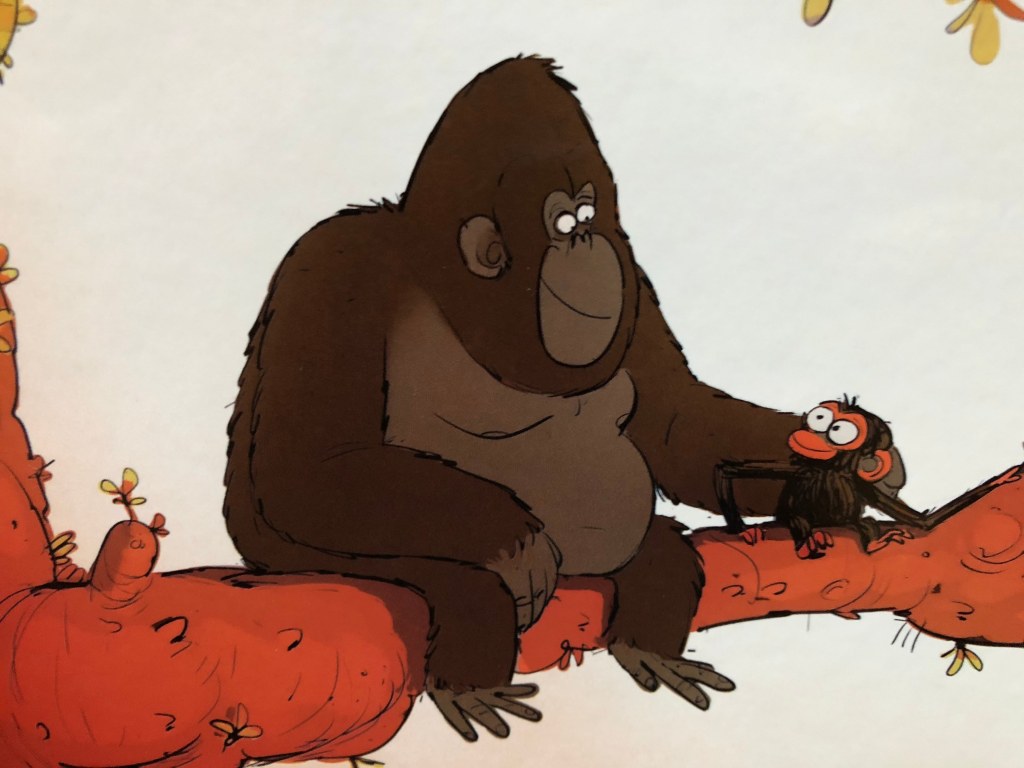
Here’s what actually happens: Jim wakes up grumpy, and his friends, starting with Norman, notice his sour attitude. Norman accompanies Jim as he encounters more friends who ask him why he’s grumpy. Jim insists that he isn’t and adjusts whatever that friend points out as the reason they think he’s grumpy (his hunched-over form, eyebrows, frown), until he’s standing tall with his eyebrows raised and a gigantic grin on his face.
Ah, I got it, I thought. It’s not about looking for things to be happy about, it’s essentially a kid’s version of “fake it ‘til you make it.” I’m not sure how I feel about this story; this might not only be the first but also the last time we read this one.
I turned the page and just stared at the few words that were there until my daughter got impatient for me to continue reading. Swallowing the emotion that was swelling my throat, I read the words aloud.
“Finally, Jim looked happy. But he didn’t feel happy inside.”
Let that sink in for a moment—I certainly had to.
Over the next several pages, the other animals—Jim’s friends—try to get him to do the things they find to be fun, and you see Norman happily engaging in the activities while Jim grumpily refuses to participate. It all culminates when they ask him why he’s so grumpy on such a wonderful day and Jim snaps, shouting that he’s not grumpy and storming away from everyone.
He sits alone and thinks about the day’s events, realizing he is grumpy and feeling down about it when Norman appears, unhappy because he’s pulling porcupine quills out of his backside. Norman sits down next to Jim and assures him that while it hurts, he’s sure he’ll feel better soon. Jim agrees and confesses that he just needs to be grumpy for the time being.
Norman sits there and only says, “It’s a wonderful day to be grumpy.”
Wow.
This is so powerful. Society expects us to put on a smile, regardless of how we’re feeling. There’s so much pressure to be happy, and if you’re not, to be sure you don’t inconvenience anyone by allowing that to be known. But this book is saying the exact opposite; that it’s okay to be unhappy—to feel your feelings—whatever they may be. That not only is it okay, but you don’t have to be alone.
Norman is happy, enjoying the wonderful day. But he knows that Jim is grumpy, and he sticks by him anyway. He doesn’t try to force him to be happy, or attempt to use logic to explain why Jim shouldn’t be grumpy, or avoid Jim altogether because of their difference in moods.
Instead, he demonstrates the concept of “holding space” for someone.
Holding space means to practice empathy and compassion by consciously being present to witness and allow someone else’s pain or emotional turmoil without judgment.
Everyone needs a Norman.
There isn’t anyone who can escape those days of feeling grumpy for no reason. And for some people, it’s more severe than that. Some people battle anxiety, or depression, or both. And they need someone who can hold space for them as they work through it.
But in order for everyone to have a Norman, we’ve all got to do our part to be a Norman. So I’m challenging myself, AND YOU, to channel our inner Normans when someone is out of sorts.
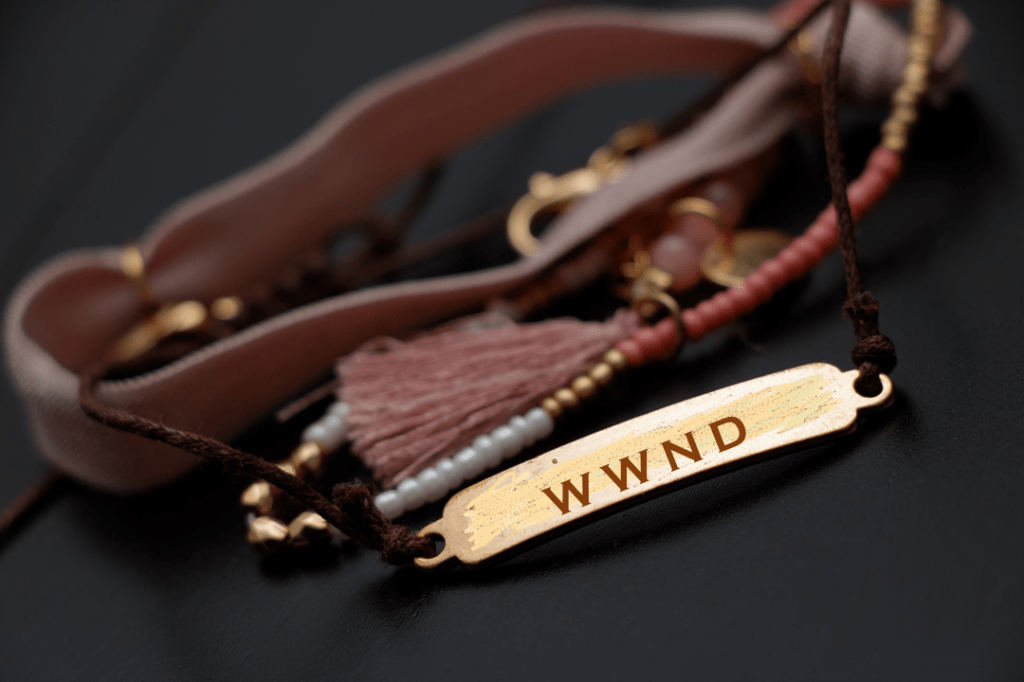
I challenge us all to think, “What Would Norman Do?”
Katherine Turner is the author of Finding Annie, a contemporary romantic women’s fiction novel that explores the power of love and human resilience in the wake of trauma and abuse. She blogs about mental health, trauma, and ways we can be more compassionate as a society. Sign up for her newsletter to stay up to date and get the first five chapters of her novel Finding Annie free!
 Katherine Turner